20 May 2025
Understanding Supplier Certifications and Audits: A Practical Guide for Procurement Professionals
Unlock better sourcing decisions with this essential guide to decoding supplier certifications and audits: what they really mean, and how to use them to identify high-performing partners across industries.
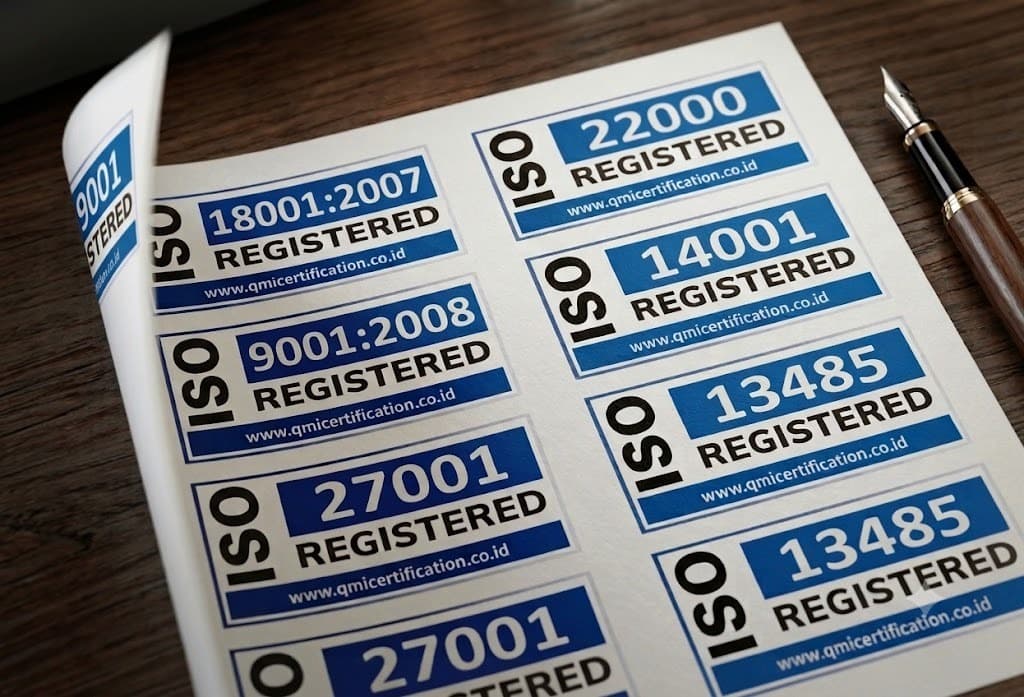
When you're sourcing new suppliers, whether for raw materials, complex components, or specialized services, certifications and audit results are more than just nice-to-haves on paper. They are critical signals of a supplier's capability, consistency, and commitment to quality. But with so many certifications out there (some global, some regional, some industry-specific) it can get overwhelming to know which ones really matter and how to interpret them.
This article is designed as a practical, no-nonsense reference to help procurement professionals like you cut through the noise. We'll explore why certifications and audits are valuable, share thoughtful insights on how to use them wisely, and provide a comprehensive reference table organized by industry. By the end, you'll have clearer guidance on what to look for when evaluating suppliers and how to use certification data as part of your decision-making toolkit.
Why Certifications and Audits Matter in Supplier Performance
At a glance, certifications and audits might seem like just formalities or checkboxes suppliers have to tick. But in reality, they're windows into how a supplier runs their operations. A well-maintained certification often means that a supplier has proven they follow industry best practices, manage risks effectively, and continuously improve their processes.
Here's what certifications can tell you about a supplier:
- Consistency and Quality Control: Standards like ISO 9001 or IATF 16949 show that suppliers have repeatable, documented processes that reduce defects and variability.
- Risk Mitigation: Certifications such as ISO 26262 (functional safety for automotive) or IECEx (explosive atmosphere equipment) demonstrate a supplier's ability to handle high-risk products safely.
- Data and IP Protection: ISO/IEC 27001 signals robust information security practices, essential when suppliers handle sensitive data or proprietary designs.
- Industry-Specific Expertise: Certifications aligned with your industry's unique requirements, like AS9100 for aerospace or TL 9000 for telecom, reflect a supplier's understanding of critical sector standards.
- Regulatory and Market Access: Some certifications are prerequisites to do business in regulated markets, for example, GMP in pharma or FDA 21 CFR Part 820 for medical devices.
Importantly, certifications are not a silver bullet. They provide a baseline of trust, but they should be combined with other performance data such as audit results, on-time delivery records, and customer feedback to get the full picture.
Key Reflections When Evaluating Certifications
Before you lean heavily on certifications in your supplier evaluation, keep these considerations in mind:
1. Not All Certifications Are Created Equal
Global certifications like ISO 9001 have broad applicability, but industry-specific or regional standards often provide deeper insights. For example, a supplier certified to IATF 16949 is likely better suited for automotive production than one with only ISO 9001.
2. Certification Scope and Depth Vary
Some certifications cover entire quality management systems, while others focus on specific processes or products. An audit for special processes like plating or welding (e.g., AIAG CQI assessments) shows expertise in niche but critical areas.
3. Watch for Validity and Maintenance
A certification's value depends on it being current and properly maintained. A certificate expired or based on a one-time audit is less reliable than one with ongoing surveillance audits.
4. Consider Complementary Assessments
Self-assessments and customer audits provide additional layers of insight. Certifications indicate process maturity, but audit results reveal actual compliance and any gaps.
5. Look Beyond Compliance to Capability
Some suppliers may be certified but still struggle operationally. Certifications should be an input, not the sole determinant, in sourcing decisions.
How to Use the Supplier Certifications Table
The table included below is organized by industry and certification type to help you quickly identify relevant standards when evaluating suppliers. Here's how to get the most out of it:
- Filter by Industry: Find the certifications that apply specifically to your sourcing category.
- Understand Focus and Scope: Use the "Focus/Scope" column to see what each certification covers e.g. quality management, safety, information security, etc.
- Evaluate Relevance: The "Sourcing Relevance" column highlights what insights a certification can provide about a supplier's capabilities and risks.
- Use as a Starting Point: Combine this certification data with other supplier information e.g. performance KPIs, audit reports, references to make well-rounded decisions.
Supplier Certifications Reference Tables
The full, detailed tables are below. They include major global and regional certifications and audit frameworks relevant to key industries. Use this as your go-to reference when vetting suppliers.
| Table: General (incl. software and maturity models) | ||||
|---|---|---|---|---|
| Audit / Framework | Issuer / Owner | Industry | Focus / Scope | Sourcing Relevance |
| ISO 9001 | ISO | All | General QMS framework | Universally recognized baseline. Helps buyers screen suppliers for quality control maturity. |
| ISO/IEC 27001 | ISO | All | Information security management system | Indicates a supplier protects sensitive data through structured governance, important for IP-sensitive procurement. |
| CMMI | ISACA | Aerospace, Electronics, IT | Process maturity model for development, services | High maturity rating implies low project risk and predictable delivery. Valuable for software subcontracting. |
| SAFe | Scaled Agile | Software | Agile development scaling framework | Indicates supplier uses scalable agile practices, valuable in fast-moving software/hardware co-development. |
| ISO 56002 | ISO | Innovation | Innovation management system framework | Suggests supplier has systems to support structured innovation, a differentiator in high-change environments. |
| GMP | WHO / FDA / EU | Cross-Industry (Pharma, Food, Cosmetics) | Good manufacturing practices for clean, controlled processes | Baseline for regulated production environments; signals supplier's hygiene, process integrity, and traceability controls. |
| Table: Automotive | ||||
|---|---|---|---|---|
| Audit / Framework | Issuer / Owner | Industry | Focus / Scope | Sourcing Relevance |
| IATF 16949 | IATF / AIAG | Automotive | Global automotive QMS standard | Indicates mature quality management, essential for OEM qualification. Demonstrates consistency, traceability, and defect prevention. |
| VDA 6.3 | VDA (Germany) | Automotive | Process audit framework for serial production | Shows deep process control and risk mitigation. Useful in supplier selection for precision-critical parts. |
| CQI Assessments | AIAG | Automotive | Self-assessments for special processes (e.g., plating) | Indicates internal focus on special process control. Procurement value increases when validated by OEM/customer audits. |
| ISO 26262 | ISO | Automotive | Functional safety of electronic/electrical systems | Confirms supplier readiness for safety-critical systems. Mandatory for ADAS/autonomous features. |
| ISO/SAE 21434 | ISO / SAE | Automotive | Cybersecurity for road vehicles | Replaces SAE J3061. Demonstrates structured cybersecurity practices. Essential for connected and autonomous vehicle components. |
| TISAX | ENX Association | Automotive IT | Information security assessment exchange | Required by many German OEMs for suppliers handling sensitive data. Demonstrates supplier's information security maturity. |
| Automotive SPICE (ASPICE) | VDA / ISO | Automotive | Software process improvement model for embedded systems | Required for automotive embedded software vendors; high ASPICE rating shows disciplined software lifecycle management. |
| Table: Aerospace and Defense | ||||
|---|---|---|---|---|
| Audit / Framework | Issuer / Owner | Industry | Focus / Scope | Sourcing Relevance |
| AS9100 | IAQG | Aerospace | Aerospace-focused QMS (aligned with ISO 9001) | Baseline for aerospace supply; indicates ability to meet stringent aerospace requirements. |
| EN 9100 | ASD-STAN (EU) | Aerospace | European aerospace QMS (aligned with AS9100) | Equivalent to AS9100 but aligned with EU needs, required for EU aerospace projects. |
| JIS Q 9100 | JSA (Japan) | Aerospace | Japanese aerospace QMS (aligned with AS9100) | Signals compliance with Japanese aerospace norms. Buyers can expect adherence to regional expectations. |
| AS9110 | IAQG | Aerospace | MRO QMS standard | Confirms supplier's ability to maintain aerospace components with traceability and safety. |
| AS9120 | IAQG | Aerospace | QMS for distributors and stockists | Demonstrates controlled sourcing, traceability, and inventory management for aerospace components. |
| Nadcap | PRI | Aerospace | Special process accreditation (e.g., heat treat, NDT) | Confirms competency in high-risk processes; often non-negotiable for primes. |
| AQAP | NATO | Defense | NATO quality assurance framework | Indicates capability to deliver defense products to NATO standards. Procurement can rely on compliance with defense protocols. |
| DEF STAN 05-057 | UK MoD | Defense | UK MoD QMS for suppliers | Signals readiness to participate in UK defense procurement with recognized quality rigor. |
| Table: Electronics and Telecom | ||||
|---|---|---|---|---|
| Audit / Framework | Issuer / Owner | Industry | Focus / Scope | Sourcing Relevance |
| TL 9000 | QuEST Forum / TIA | Telecom | QMS for telecoms supply chain | Signals low defect rates and strong customer complaint tracking. Required for Tier 1 telecom contracts. |
| ANSI/ESD S20.20 | ESD Association | Electronics | Electrostatic discharge control | Ensures sensitive components are handled and produced safely. Buyers reduce ESD-related defect risk. |
| IPC-A-610 / IPC-A-620 | IPC | Electronics | Acceptability standards for assemblies/cables | Helps buyers enforce product workmanship standards in contracts. Indicates use of industry-wide quality criteria. |
| J-STD-001 | IPC / JEDEC | Electronics | Soldering requirements for electronics | Indicates compliance with high-reliability assembly standards. Suitable for critical electronics. |
| UL / CSA / TUV Approvals | UL, CSA, TUV | Electronics | Product safety certifications | Ensures regulatory compliance and product safety in target markets. Lowers liability risk. Certification is per product. |
| JEDEC Compliance | JEDEC | Electronics | Component standards (thermal, memory, packaging) | Indicates adherence to global electronics standards; useful for ensuring interoperability and lifecycle predictability. |
| Table: Rail | ||||
|---|---|---|---|---|
| Audit / Framework | Issuer / Owner | Industry | Focus / Scope | Sourcing Relevance |
| IRIS / ISO/TS 22163 | UNIFE / ISO | Rail | Railway industry QMS | Indicates capability to supply to international rail OEMs. |
| CENELEC EN 50126/8/9 | CENELEC | Rail | RAMS (reliability, availability, maintainability) | Signals that supplier integrates safety and lifecycle reliability in design, critical for infrastructure. |
| UIC Codes | UIC | Rail | Engineering and maintenance norms | Not a certification but signals adherence to EU rail standards. Buyers gain assurance on interoperability and compatibility. |
| Table: Oil, Gas, Energy and Hazardous Equipment | ||||
|---|---|---|---|---|
| Audit / Framework | Issuer / Owner | Industry | Focus / Scope | Sourcing Relevance |
| API Q1 / Q2 | API | Oil & Gas | QMS for upstream equipment/services | Ensures compliance with oilfield standards for reliability and safety. Required by large oil operators. |
| ISO 29001 | ISO / API | Oil & Gas | QMS aligned with ISO 9001 + oil sector specifics | Confirms a supplier understands oil sector quality needs. Strong signal of industry alignment. |
| IECEx | IEC | Hazardous | Equipment for explosive atmospheres | Ensures equipment is tested for use in explosive environments. Often a licensing requirement. |
| ATEX Certification | EU | Hazardous | EU regulation for explosive atmosphere equipment | Required to sell products for hazardous locations in EU. Signals regulatory preparedness. |
| DNV / ABS / Lloyd's | Classification Bodies | Energy/Marine | Compliance and type approvals for offshore systems | Indicates design and manufacturing meet marine/offshore quality and safety standards. Buyers gain assurance for high-risk deployments. |
| Table: Medical Devices and Pharma | ||||
|---|---|---|---|---|
| Audit / Framework | Issuer / Owner | Industry | Focus / Scope | Sourcing Relevance |
| ISO 13485 | ISO | Medical | QMS for medical devices | Confirms supplier's controls around sterile, traceable, and regulatory-compliant production. |
| ISO 14971 | ISO | Medical | Risk management for medical devices | Indicates maturity in identifying and mitigating product risks. Supports safe design and manufacturing. |
| MDSAP | Health regulators | Medical | Global medical device audit framework | Simplifies vetting of global suppliers, approved for multiple regulatory regimes. |
| FDA 21 CFR Part 820 | FDA | Medical | US FDA Quality System Regulation | Required for US medtech suppliers. Indicates readiness for FDA inspections. |
Conclusion: Certifications Are a Foundation, Not a Finish Line
Supplier certifications and audit results are powerful tools that give procurement teams tangible evidence of a supplier's process maturity, risk management, and regulatory compliance. When used thoughtfully, they reduce risk and help you identify suppliers who can deliver quality and reliability consistently.
Remember, certifications are part of a bigger picture. Always complement them with real-world performance data, site visits, and direct supplier interactions. And as industries evolve, keep your knowledge and standards up to date.
At FlockScore, we're building tools to bring you the full picture on supplier performance, making it easier for procurement professionals to make smart, confident sourcing decisions. If you're interested in learning more or joining our community, get in touch!
Benchmark your supplier performance management against your peers.